
Dubai real estate market in 2026 is still one of the most dynamic and lucrative places in the world to make your money work and to enhance your way of living. Whether you are buying yourself a sea view villa in the palm Jumeirah or a lucrative apartment at Business Bay, the process for foreigners has been A lot eased in an effort to attract overseas funds.
Yet, to access the bank market does not only rely on having sufficient money; it also takes a thorough knowledge of the local rules and the most recent period benefits. It presents you all the steps that you need to know for your entrance in the reforms of 2026.
Can a Foreigner Buy a House in Dubai?
The short answer is yes. Since 2002, the Dubai government has opened specific zones – known as Freehold Areas – to international buyers.
In 2026, foreign ownership in these zones is 100%, meaning you own both the structure and the land it sits on indefinitely. This right is registered with the Dubai Land Department (DLD) and can be inherited, sold, or leased.
Freehold vs. Leasehold: What You Need to Know
- Freehold: Absolute ownership. Popular areas include Dubai Marina, Downtown Dubai, JVC, and Dubai Hills Estate.
- Leasehold: You own the right to use the property for a fixed term (usually 99 years). These are less common in modern investor portfolios.
How Much Does It Cost to Buy a House in Dubai?
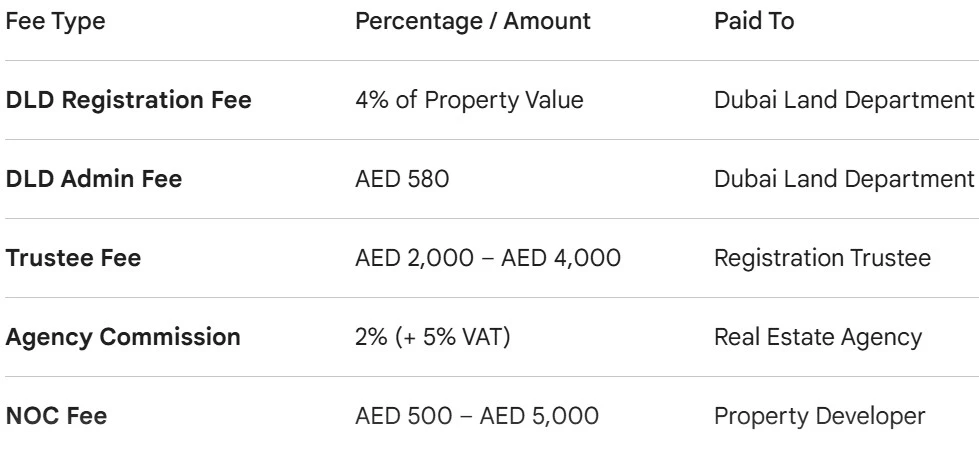
Budgeting for a property in Dubai involves more than the “sticker price.” In 2026, you should expect total closing costs to range between 5% and 8% of the purchase price.
Managing cross-border capital for a property purchase requires precision. Consult with the financial experts at Emifast to ensure your funds are moved and structured for maximum efficiency.
How to Buy a House in Dubai: The 7-Step Process
The 2026 purchase journey is highly regulated to protect both the buyer and the seller. Following these steps ensures a fast-track to legal ownership.
Define Your Investment Strategy: Decide if you are seeking high rental yields (look at JVC or Business Bay) or long-term capital appreciation (look at Dubai South or Palm Jumeirah).
Select a Property and Negotiate: Once you find a house, your agent will help you negotiate the price and terms.
Sign the MOU (Form F): This is the official contract between buyer and seller. You will typically pay a 10% security deposit, which is held by a neutral third party until the transfer.
Apply for the NOC: The seller applies for a No Objection Certificate from the developer. This proves the property has no outstanding service charges and is clear for sale.
Secure Your Financing: If you are a non-resident, UAE banks in 2026 generally require a 20-25% down payment. Ensure your pre-approval is in place before signing the MOU.
Transfer of Ownership: Both parties meet at a DLD Trustee office. You pay the remaining balance, and the DLD issues a new Title Deed in your name.
Finalize Utilities and Residency: Register your ownership with DEWA (Electricity & Water) and, if eligible, start your residency visa application.
2026 Residency Incentives: The Golden Visa
Property ownership is the most reliable path to a UAE residency visa. As of 2026, the thresholds are:
10-Year Golden Visa: The property purchase price shall be minimum of AED 2 million (approx. $ 545,000). This visa is self-sponsored so theholder can stay outside the country for a long period as well.
2-Year Investor Visa: In early 2026, the “DLD Cube” platform has introduced even more flexible options for sole owners, often removing the rigid AED 750k floor in specific investment zones.
Benefits of Investing in Dubai Real Estate
- Tax-Free Capital Gains: Unlike the UK or Europe, the UAE does not tax your capital gains when you sell your property.
- High Rental Yields: In 2026, yields in areas like Dubai Marina and JLT remain between 6% and 9%, far outperforming other global hubs.
- Stable Currency: The AED is pegged to the USD, providing a “safe haven” for international investors.
- Golden Visa Access: Ownership grants you and your family long-term residency in one of the world’s safest cities.
FAQ: Common Questions for 2026 Buyers
Do I need a residency visa to buy a house in Dubai?
No, you only need your passport to purchase real estate in Dubai as a non-resident. But, possession of property can Later work as the foundation for a residence visa application.
Can I buy a house in Dubai with a mortgage?
Yes. Non-residents are eligible for mortgages in the UAE. Most banks in 2026 offer up to 75% Loan-to-Value (LTV) for residents and 50-60% for non-residents.
Are there any hidden taxes after I buy?
The UAE do not charge any yearly property tax. What you really need to pay be your annual service charges to the developer to cover the maintenance of the communal areas and the facilities.
Is it better to buy off-plan or ready property?
Off-plan properties often offer lower entry prices and flexible payment plans. Ready properties allow for immediate rental income and eligibility for residency visas. Your choice depends on your cash flow goals.
What is the “DLD Registration Fee”?
This charge is only levied once at a rate of 4% of the property value, just like stamp duty. Although the law takes the 2% to be divided between the buyer and the seller, we are seeing that in the 2026 market it is most common that the buyer bears the entire 4% charge.