
Dubai is now the heartbeat of global business – a place where international founders and regional companies see real opportunity. The city offers everything: top-notch infrastructure, unbeatable connections around the world, and regulations that actually encourage growth.
Still, starting a business in a new country can feel intimidating, especially if you don’t have a plan. With Dubai’s new rules for 2026, including updates like the corporate tax changes, you really need to know how things work. Getting familiar with the process saves you from annoying paperwork and costly surprises.
The Core Benefits of Starting a Business in Dubai
Before analyzing the logistical mechanics, it is important to understand why global founders continue to funnel capital into this region. The benefits of starting a business in Dubai extend far beyond its geographic location:
- 100% Foreign Ownership: Whether you establish your company on the Mainland or within a Free Zone, you retain absolute ownership of your corporate shares without needing a local majority partner.
- Premier Tax Framework: The UAE maintains a highly favorable tax environment, featuring 0% personal income tax and a competitive 9% corporate tax rate that includes generous exemptions for qualifying small businesses and free zone entities.
- Strategic Residency Access: Launching an enterprise grants you and your family eligibility for long-term residency visas, including investor visas and potential paths to the 10-year Golden Visa.
- Unrestricted Capital Mobility: Dubai imposes zero exchange controls or restrictions on capital repatriation, allowing you to move your corporate profits globally without friction.
The Vital Rules and Requirements for 2026
Operating a business here means complying with specific regulatory guardrails. The rules for starting a business in Dubai are governed by federal corporate laws and local municipal departments.
To ensure compliance, you must meet the fundamental starting a business in dubai requirements:
Legal Structure Selection
You must align your company with an approved legal entity, such as a Limited Liability Company (LLC), a Sole Establishment, or a Branch of a Foreign Company.
Activity Classification
Your trade license must explicitly state your corporate activities. The Department of Economy and Tourism (DET) classifies thousands of business activities across industrial, commercial, and professional sectors.
Corporate Tax Registration
Regardless of your revenue size or jurisdiction, all new corporate entities must register for UAE Corporate Tax with the Federal Tax Authority (FTA) and obtain a Tax Registration Number (TRN) within the prescribed legal timelines.
Mainland vs. Free Zone: Choosing Your Jurisdiction
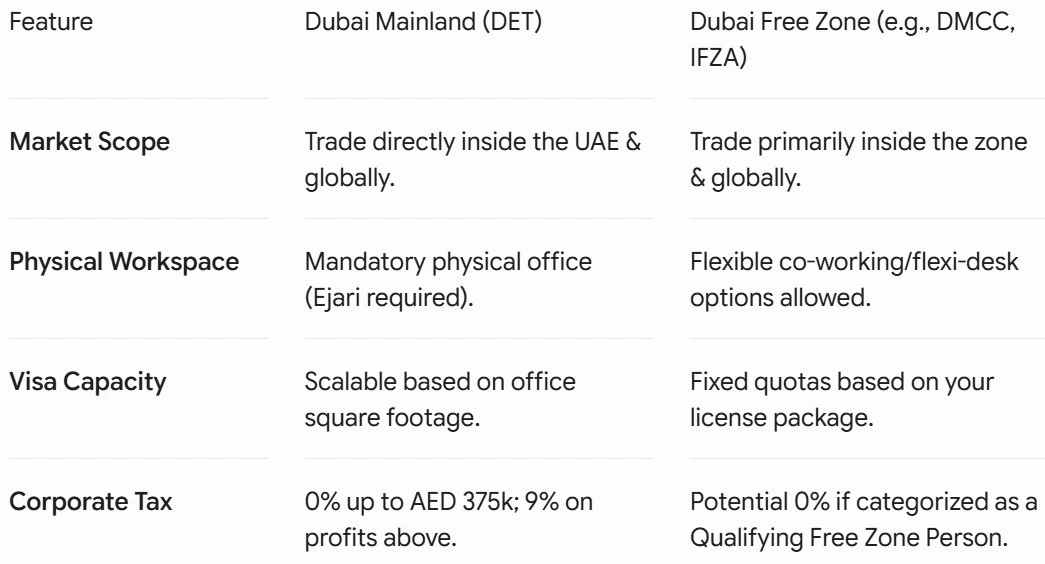
The most critical decision you will make is selecting between a Mainland structure and a Free Zone jurisdiction. This choice dictates where you can trade and how your company is governed.
The Step-by-Step Incorporation Roadmap
The timeline for launching an enterprise has been substantially compressed due to government digitalization. Here is the structured, step-by-step process to follow:
- Define Your Business Activities: Clearly isolate what your business will do. This step is crucial because it dictates both your license type and your structural jurisdiction.
- Register Your Trade Name: Submit your proposed company name to the authorities. The name must be unique, free from sensitive terminology, and compliant with local naming guidelines.
- Secure Initial Approval: Obtain a formal green light from the relevant authority (DET or Free Zone), which indicates that the government has no objection to you opening a business.
- Draft the Corporate Constitution: Prepare and sign your Memorandum of Association (MoA) or Articles of Association (AoA). For mainland companies, this involves local notary approval.
- Establish Your Corporate Address: Secure a physical workspace lease. For mainland entities, register this lease through the Ejari system; for free zones, establish a flexi-desk or private office agreement.
- Receive Your Trade License: Make the final government fee payments to download your official trade license and corporate establishment card.
- Initiate Banking and Visa Processing: Open your corporate bank account and submit your immigration applications to secure your residency visas and Emirates ID.
The Realistic Cost of Starting a Business in Dubai
Your initial capital requirements depend heavily on your chosen jurisdiction, visa count, and real estate choices. The cost of starting a business in Dubai can be broken down into clear, reliable benchmarks:
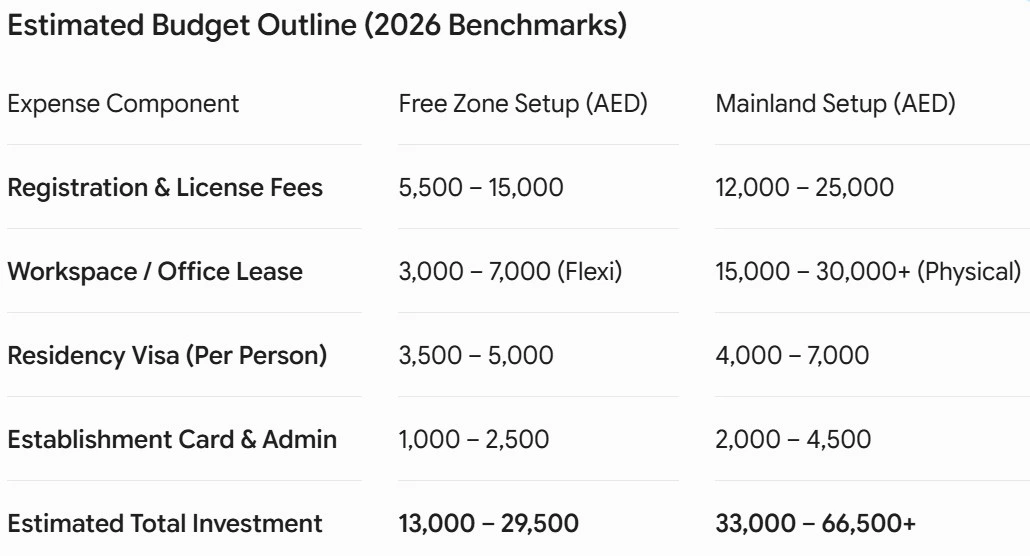
Note: These figures represent entry-to-mid-tier structural setups. Premium zones or complex industrial licenses will require unique, specialized budgeting allocations.
Budgeting accurately prevents your capital from being locked up during registration. Connect with Emifast for a completely transparent cost breakdown tailored to your exact business blueprint.
Frequently Asked Questions (FAQs)
What is the absolute minimum cost to start a company in Dubai?
If you’re a freelancer, solo consultant, or digital nomad, you can get a basic Free Zone license with a flexi-desk setup for as little as AED 5,500 to AED 9,000. That doesn’t cover visa or bank account costs, though.
Can I operate a Dubai business without living in the UAE?
Yes—it’s pretty straightforward to register and fully own your company online, thanks to virtual onboarding. But here’s the catch: if you want to open a local business bank account, you’ll usually have to fly in for identity verification.
How does the corporate tax apply to small startups in Dubai?
If you’re a UAE resident company and your yearly revenue stays under AED 3 million, you can use the Small Business Relief scheme and pay 0% corporate tax. It’s a huge help for startups looking to keep their costs down.
Is a local sponsor still required for a mainland business?
No, the UAE has phased out the old requirement for a local Emirati sponsor holding 51% of shares across almost all commercial and professional business sectors, allowing for 100% expatriate control.
How long does it take to get a trade license?
Certain instant-license packages in both the Mainland and specific Free Zones can be processed online in 24 to 48 hours. Complex licenses requiring external ministry approvals (such as healthcare or food trading) can take 2 to 4 weeks.