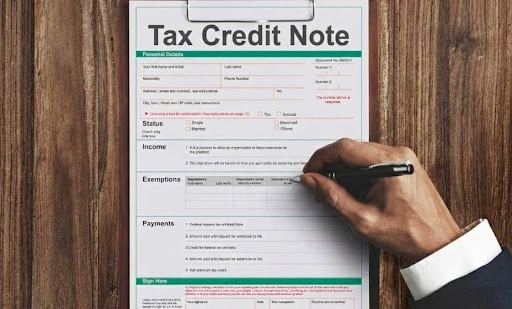
In the fast-paced UAE business environment, precision is your greatest asset. Whether you are running a mainland enterprise or a Free Zone startup, understanding the tax credit note is vital for maintaining a clean audit trail. In 2026, with the Federal Tax Authority (FTA) tightening enforcement on input tax recovery and audit timelines, a minor error in your tax invoice credit note could lead to significant financial setbacks.
This article provides everything you need to optimize your VAT processes, from a compliant tax credit note format to the legal nuances of the 14-day issuance rule.
What is a Tax Credit Note in the UAE?
A tax credit note is a formal document issued by a registered supplier to a recipient to acknowledge a reduction in the value of a taxable supply. It acts as the “reverse gear” of a tax invoice. Under Article 61 of the UAE VAT Law, it is the only legal way to decrease the VAT amount previously reported on a tax invoice.
When Must You Issue a Credit Note?
You cannot simply delete or change an invoice once it is issued. You must issue a credit note when:
- Goods are Returned: The customer returns products due to defects or dissatisfaction.
- Discounts are Granted: A post-sale discount or rebate is agreed upon after the initial invoice.
- Pricing Errors: You accidentally overcharged the customer.
- Tax Treatment Correction: You applied the standard 5% rate to a zero-rated or exempt supply.
Mandatory Tax Credit Note Format in UAE
To be valid for an FTA audit, your tax credit note format must contain specific legal data. Missing even one field can trigger an automatic AED 2,500 penalty per document.
Required Fields for 2026 Compliance:
- Prominent Title: The words “Tax Credit Note” must be clearly displayed.
- Supplier Details: Name, address, and your 15-digit Tax Registration Number (TRN).
- Recipient Details: Name, address, and the customer’s TRN (if they are registered).
- Unique Sequential Number: A specific serial number to identify the credit note.
- Date of Issue: The actual date the document is generated.
- Original Invoice Reference: A clear link to the original tax invoice number and its date.
- Reason for Adjustment: A brief explanation (e.g., “Return of 5 defective units”).
- Financial Breakdown: Original amount, the reduction amount, the adjusted VAT amount, and the new total.
Tax Invoice vs. Credit Note vs. Debit Note
Understanding the relationship between these documents is essential to thrive in the UAE’s tax landscape.
Step-by-Step Process for Issuing a Credit Note
Issuing a credit note sample correctly requires a disciplined workflow. Follow these 6 steps to stay compliant:
- Identify the Trigger Event: Confirm the return, discount, or error within 24 hours of discovery.
- Verify the Original Invoice: Locate the exact invoice in your records to ensure the TRNs and values match.
- Calculate the Adjustment: Determine the exact reduction in both the taxable value and the 5% VAT portion.
- Generate within 14 Days: UAE law mandates that you issue the credit note within 14 calendar days of the triggering event.
- Deliver to the Recipient: Provide a physical or electronic copy to your customer so they can adjust their input tax.
- Update VAT Return: Reflect the adjustment in Box 1 (Standard Rated Supplies) of your VAT return for the current period.
The 2026 Regulatory Landscape: What’s New?
As we navigate 2026, the FTA has introduced stricter rules that every business owner must master:
- 5-Year Limit on Credits: Any excess recoverable tax (VAT credits) must be claimed within 5 years, or they will expire. Emifast can help you audit old credits before they are lost.
- E-Invoicing Phase-In: Electronic credit notes are becoming the standard. They must be tamper-proof and easily retrievable for 5 years.
- Audit Readiness: The FTA now has expanded powers to deny input tax recovery if the credit note does not clearly reference the original supply.
Benefits of Professional VAT Management

Establishing a robust system for your tax invoice credit note provides more than just compliance; it offers a competitive ROI:
- Cash Flow Optimization: Correctly issued credit notes reduce your VAT liability, keeping more cash in your business.
- Legal Advantage: A perfect audit trail prevents the FTA from imposing administrative penalties that can range up to AED 20,000 for systemic failures.
- Customer Trust: Professional, accurate documentation reinforces your brand’s credibility in the UAE market.
Conclusion: Mastering Your UAE Tax Compliance
In the landscape of 2026, a tax credit note is far more than a simple accounting adjustment – it is a critical legal document that safeguards your business from the heavy hand of FTA penalties. As the UAE continues to lead the region in digital tax transformation, the margin for error in your tax credit note format has effectively vanished.
By adhering to the mandatory 14-day issuance rule and ensuring every tax invoice credit note is meticulously linked to its original transaction, you don’t just avoid fines; you optimize your financial integrity and build long-term trust with both the authorities and your clients.
However, managing high-volume transactions and staying ahead of evolving Decree-Laws can be overwhelming. Don’t let a clerical oversight derail your business growth.
Contact Emifast today for a free consultation on your Tax Credit Note procedures!
Frequently Asked Questions (FAQs)
What is the penalty for a late tax credit note in the UAE?
The FTA imposes a penalty of AED 2,500 for each instance of failing to issue a tax credit note correctly or on time (within 14 days of the event).
Can a buyer issue a credit note in the UAE?
No. Under UAE VAT law, only the supplier is authorized to issue a tax credit note. However, if the buyer returns goods, they may receive a credit note from the seller to adjust their input tax.
Does a credit note need to show the TRN?
Absolutely. Both the supplier’s and the recipient’s TRNs (if registered) are mandatory fields on a valid UAE tax credit note format.
Can I issue one credit note for multiple invoices?
Yes, the FTA allows a single document to be labeled as “Tax Invoice / Tax Credit Note” for multiple supplies, provided each adjustment is clearly traceable to the original invoices.
How long should I keep copies of my credit notes?
You must retain all tax records, including credit notes, for at least 5 years (or 15 years for real estate records) to remain compliant with record-keeping laws.
Is a credit note itself subject to VAT?
No. A credit note is a correction tool. It reduces the VAT amount from a previous transaction; it does not generate new VAT liability.