
Dubai has established itself as a global business center. It attracts entrepreneurs and companies from around the world who want a strategic position between East and West. For many, the main attraction is the Dubai Free Zones. These are special economic areas that offer great incentives.
If you want to set up a business in the UAE with 100% foreign ownership in a tax-friendly setting, a Free Zone is probably your best option. However, with more than 30 choices in Dubai alone, it can be tough to navigate.
This guide serves as your go-to resource. We will clarify the options, compare popular zones, and outline the steps to speed up your setup and encourage growth in the UAE.
What Are Dubai Free Zones? (And Why They Matter)
A Dubai Free Zone is a specific area within the emirate that has its own rules, separate from the mainland. These zones aim to attract foreign investment by lifting usual ownership restrictions and providing major financial benefits.
In essence, they are business ecosystems tailored to specific industries – from finance and tech to logistics and media – allowing international companies to thrive.
The Key Difference: Free Zone vs. Mainland
The most critical distinction to understand is trading scope.
A Mainland company is licensed to trade directly within the local UAE market with consumers and other mainland businesses.
A Free Zone company is generally restricted to trading within the zone itself or internationally. To trade directly with the local mainland market (“onshore”), a Free Zone entity typically needs to appoint a local distributor or establish a separate mainland branch.
Unlocking the Benefits: Why Choose a Free Zone?
Setting up in one of the many UAE free zones offers a number of benefits to maximize your return on investment.
- 100% Foreign Ownership: Maintain complete control of your business. Unlike some mainland setups, you do not need a local UAE sponsor or partner.
- Zero Tax Regime: Thrive financially. Benefit from 0% personal income tax. Many businesses also benefit from 0% corporate tax, provided they meet specific criteria under the new UAE Corporate Tax law.
- Full Capital Repatriation: Enjoy financial freedom with the ability to move 100% of your profits and capital back to your home country without restriction.
- World-Class Infrastructure: Access “plug-and-play” setups including ready-to-use offices, warehousing, and advanced digital ecosystems designed for efficiency.
- Strategic Global Hub: Leverage Dubai’s geographic advantage to fast-track trade and connectivity between European, Asian, and African markets.
Popular Free Zones in Dubai & UAE: A Comparison
Choosing the right jurisdiction is vital. Below is a comparison of some of the most popular free zones in UAE to help you understand their specializations.
Quick Comparison of Popular UAE Free Zones
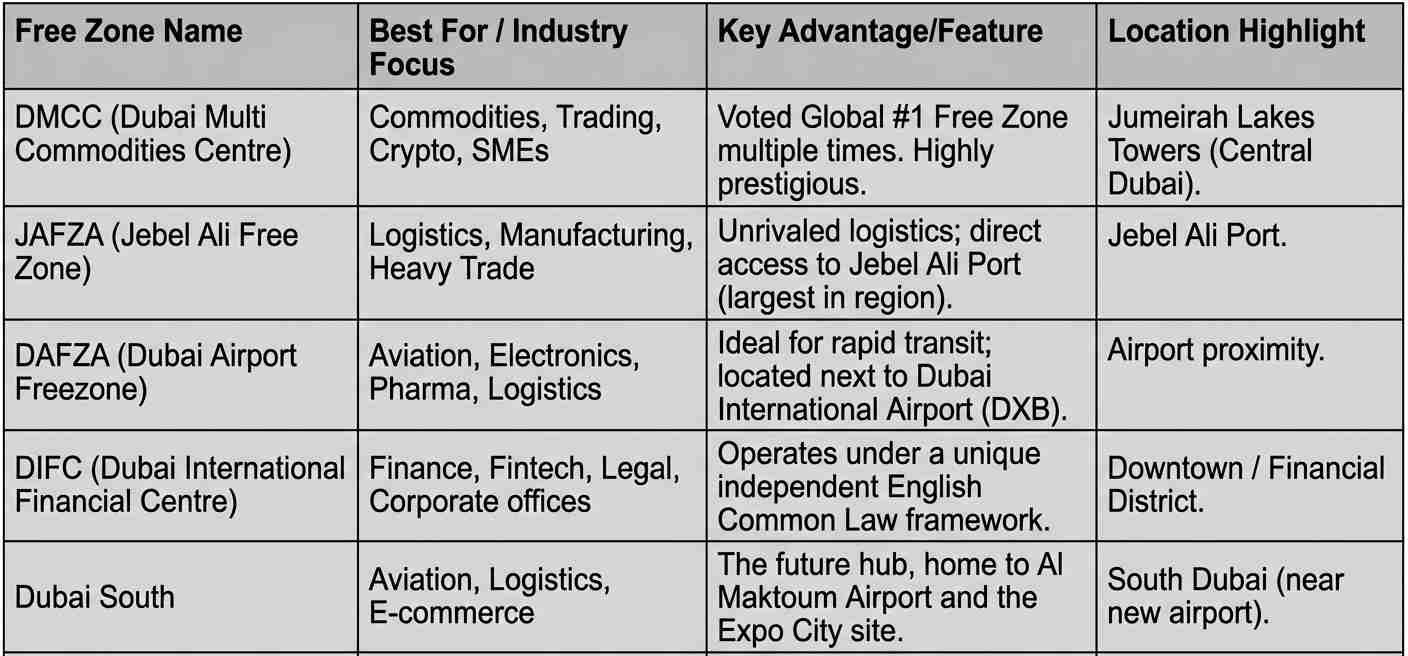
DMCC (Dubai Multi Commodities Centre)
Located in the heart of new Dubai, DMCC is a massive hub for global trade. It is ideal for trading companies, consultancies, and increasingly, crypto and Web3 businesses.
JAFZA (Jebel Ali Free Zone)
One of the largest free zones in the world, JAFZA drives Dubai’s industrial and logistics sector. Its direct link to the port is essential for manufacturers and global shippers.
DAFZA (Dubai Airport Freezone)
For businesses that need fast air cargo, DAFZA provides top-notch facilities close to one of the world’s busiest airports. It mainly serves the electronics, pharmaceuticals, and aviation industries.
DIFC (Dubai International Financial Centre)
DIFC is the top financial center in the MEASA region. It has its own legal system based on English Common Law. This makes it the preferred choice for investment banks, law firms, and fintech startups.
Dubai South
Positioned as the city of the future, Dubai South is a huge development centered around the new Al Maktoum International Airport and the Expo 2020 site. It focuses on logistics and e-commerce.
IFZA (International Free Zone Authority)
IFZA is very popular with SMEs and consultants because it has simple processes, competitive pricing, and allows most of the setup to be done remotely.
Looking for more budget-friendly company formation options? Make sure to explore our full guide on the cheapest Free Zones in the UAE to compare costs and find the best fit for your setup.
How to Choose the Right Free Zone for Your Business

Selecting from the list of free zones in UAE requires aligning the zone’s offerings with your business needs.
- Define Your Activity: This is paramount. If you are in finance, DIFC is natural. If you are shipping heavy goods, JAFZA is better. Some zones do not permit certain activity types.
- Consider Location & Logistics: Do you need proximity to an airport or seaport for shipping? Or do you need a prestigious central office to meet clients?
- Evaluate Costs & Budget: Premium zones like DIFC or DMCC have higher setup and operational costs compared to newer or more remote zones like IFZA or Meydan.
Steps to Setup Your Company in a Free Zone
While specifics vary slightly by authority, the general process for business setup in free zones follows this streamlined path.
- Define Your Business Activity: The most critical step. Your specific activity (e.g., “IT consultancy” vs. “General Trading”) dictates which zones you can enter and influences the license cost.
- Select Your Ideal Jurisdiction: Based on your activity, shortlist the 2–3 best zones using the comparison above. Consider factors like required office space, budget, and prestige.
- Choose Your Trade Name: Propose at least three unique options for approval. Ensure they adhere to strict UAE naming conventions (no offensive language, no religious references).
- Submit Application & Documents: Apply for initial approval with the chosen authority. Basic documents usually include passport copies and a brief business plan. Many zones now offer fully digital application processes. For seamless support, discover how Emifast can assist you in preparing and submitting all necessary paperwork.
- Draft Legal Documents & Pay Fees: Once approved, sign the Memorandum of Association (MOA) or lease agreements for your office space. Pay your license fees to receive your official business license.
- Process Visas & Open Bank Account: With the license in hand, proceed to apply for your investor visa, staff visas, and Emirates ID. Finally, initiate the corporate bank account opening process.
Let our specialists handle the bureaucracy, from licensing to visas. Get a tailored quote now!
Conclusion: Start Your Free Zone Journey Today
UAE Free Zones provide an excellent platform for international business growth. They offer full ownership and a favorable tax environment. By selecting the right jurisdiction and following the right steps, you can set your company up for significant growth in the Middle East.
The opportunity is large, but the landscape is complicated. Don’t let red tape hold you back.
Frequently Asked Questions About UAE Free Zones
Can a Free Zone company trade in Dubai Mainland?
Generally, no. A Free Zone company is licensed to trade within the zone itself or internationally. To trade directly with the local mainland market (onshore), you usually need to appoint a local distributor or set up a mainland branch.
Which is the cheapest free zone in Dubai?
Costs vary based on activity. However, zones like IFZA (International Free Zone Authority) and Meydan Free Zone are often viewed as affordable choices for SMEs and consultancies seeking basic license packages with virtual office options.
Do I need a physical office in a Free Zone?
Yes, UAE law requires a registered business address. However, most Free Zones offer flexible and affordable “Flexi-desk” or virtual office packages designed for startups that satisfy this legal requirement without renting a full physical space.
Are UAE Free Zones exempt from Corporate Tax?
Under the new UAE Corporate Tax regime, qualifying Free Zone Persons can benefit from a 0% Corporate Tax rate on “Qualifying Income.” Income that does not qualify may be subject to the standard 9% rate. Professional tax advice is highly recommended.